

Buying property in Bali as a foreigner is one of the most rewarding and most misunderstood – decisions in international real estate.
This guide covers how foreign ownership actually works in Bali in 2026 — the legal structures available, what each one means in practice, the costs involved, and the mistakes that cost buyers serious money every year.
Can Foreigners Buy Property in Bali?
Yes, but not in the way most buyers expect.
Under Indonesian Basic Agrarian Law No. 5/1960, freehold title (Hak Milik) is reserved exclusively for Indonesian citizens. A foreigner cannot hold freehold land in Bali in their own name, under any circumstance. This is not a technicality. It is a foundational rule of Indonesian property law.
What foreigners can hold is one of three legally recognized structures: leasehold (Hak Sewa), Right to Use (Hak Pakai), or a stake in a foreign-owned company (PT PMA) that holds a Right to Build title (HGB). Each suits a different buyer profile.
The Three Legal Routes
1. Leasehold (Hak Sewa) — most common for foreign buyers
Leasehold is how the majority of international villa purchases in Bali are structured. You do not own the land – you acquire the contractual right to use and benefit from the property for a defined term, typically 25–30 years, with extension options often reaching 80–99 years depending on contract terms.
The critical thing most buyers miss: leasehold is not registered at Indonesia’s National Land Agency (BPN). It is a private contract between two parties. If the landowner sells, dies, or faces creditors, your rights depend entirely on contract law not land law. You have no entry in the government land registry. This makes the quality of the contract the most important document in the transaction. Every clause matters, including the renewal terms, the priority-to-extend language, and whether the lease is notarised by a certified PPAT official.
The same property can legally be leased to multiple buyers simultaneously without any of them knowing. Always use an independent PPAT notary and request a notarial search for existing agreements on the property before committing.
2. Hak Pakai (Right to Use) — for residents with valid KITAS or KITAP
Hak Pakai is a government-issued title, registered at BPN, and carries stronger legal protection than leasehold. It is available to foreigners who hold a valid Indonesian residency permit (KITAS or KITAP). Without a valid stay permit, you cannot obtain or renew this title.
The minimum purchase threshold under Hak Pakai for landed properties in Bali is approximately IDR 5 billion (roughly USD 300,000). You can hold one property under this title. It is residential in designation — commercial rental operations require additional permits.
3. PT PMA (Foreign-Owned Company) — for investors running a rental business
A PT PMA is a foreign investment company registered under Indonesian law. It can hold land under Hak Guna Bangunan (HGB — Right to Build), valid for up to 80 years across initial term and extensions. This is the strongest legal route for commercial investors operating a rental villa business.
A PT PMA is not simply a shortcut to ownership. It is a company, with annual compliance obligations, accounting requirements, tax filings, and director responsibilities. For a single holiday villa under USD 200,000, the overhead is rarely justified. For a professionally managed rental property generating significant income, it usually is.
What you must never do: nominee arrangements
A nominee arrangement – where an Indonesian citizen holds freehold title on your behalf – is explicitly illegal under Indonesian law and void from the moment of signing. The Indonesian courts recognise the nominee as the legal owner. If the relationship breaks down for any reason, you have zero legal recourse. This is the single most common cause of total investment loss in Bali. It is not a legal grey area. Avoid it entirely.


Get The Bali Investment Brief 2025/26
Enter your email below to receive your private download.
Zoning and Rental Licensing
Before any Bali purchase, verify the zoning designation of the land. Agricultural (green zone) land cannot legally support villa construction or short-term rentals. Bali’s spatial plan designates land into zones, and the Tourism Zone (pink zone) is required for legal short-term rental operations.
In July 2025, the Indonesian government demolished villas in Bingin Beach that violated zoning regulations. Enforcement is active and increasing.
Short-term rental operations also require a Pondok Wisata tourist accommodation licence. Without this licence, renting to tourists is technically illegal in Bali. Enforcement tightened significantly across South Bali in 2026. If you are buying specifically for rental income, which describes most international villa buyers confirm the zoning and licensing pathway before you sign anything.
Market Prices in 2026
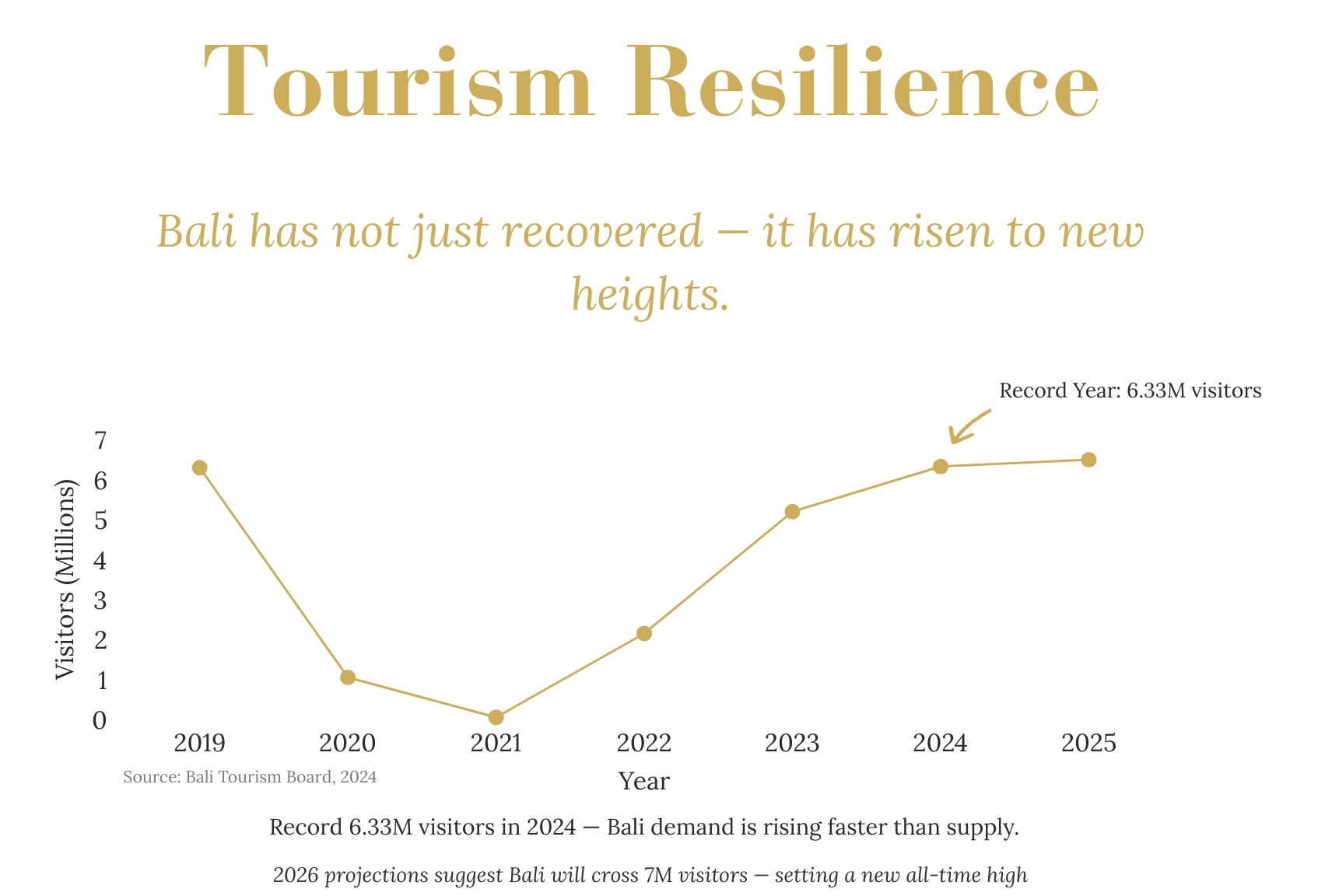
Average villa prices in Bali moved from USD 321,000 in Q1 2024 to USD 484,000 in Q1 2025 – a 51% increase in twelve months, according to REID market data. Bali received over 6.3 million foreign visitors in the first eleven months of 2025, up 12% year-on-year (BPS Bali statistics). Built villa prices in Canggu currently range from USD 1,500-4,000 per square metre, while Uluwatu land remains approximately 40% cheaper than Canggu for comparable plots (COCO Development Group Q1 2026).
Total off-plan inventory contracted 9% in 2025, meaning supply is tightening at the same time demand is rising (REID 2025 Annual Report).
Closing Costs
For a leasehold purchase, budget approximately:
- Notary / PPAT fees: 1-2% of purchase price
- Land and Building Tax (BPHTB): 5% of purchase price (minus the non-taxable threshold)
- Legal fees: USD 1,000-3,000 for independent legal counsel (recommended, not optional)
For a PT PMA structure, add company formation costs of approximately USD 2,000-5,000, plus ongoing annual compliance fees.
What Buyers Most Often Get Wrong
The renewal clause. Leasehold contracts frequently include vague language around extension rights. A contract that says “the parties agree to discuss renewal” gives you nothing enforceable. The renewal term, price mechanism, and priority right must be explicit in the original contract – not left to a future negotiation with a landowner whose interests will not align with yours at that point.
The PPAT notary. Using the agent’s recommended notary is a structural conflict of interest. Your notary should be independent – chosen by you, working exclusively for you.
The zoning check. Looking at the property before checking the land zoning is the order in which most buyers get into trouble. Check zoning first.
Independent Guidance
Soulberg Estates works with personally vetted Bali partners – agents, notaries, and legal specialists who have been assessed for how they handle buyers, not just sellers. If you are considering a Bali purchase and want a genuinely independent introduction before anything else moves forward, begin your enquiry below.
Buyer Questions
Buying Property in Bali as a Foreigner
No. Indonesian law prohibits foreign nationals from owning land in freehold (Hak Milik). Foreigners can legally purchase through leasehold (Hak Sewa), Hak Pakai (right of use for qualifying visa holders), or by establishing a PT PMA foreign-owned company for freehold-equivalent ownership. Each structure carries different risks and costs.
Entry-level villas in areas like Canggu and Seminyak start from approximately $150,000–$200,000 on leasehold. Freehold-equivalent ownership via PT PMA typically starts from $250,000–$300,000 for a basic property. Luxury villas in Pererenan, Ubud, or beachfront Uluwatu range from $500,000 upward.
Leasehold agreements typically run 25–30 years with renewal options, bringing total tenure to 50–80 years in many cases. However, renewal rights are not guaranteed in law — they depend entirely on what is written in the contract. Always have a qualified Indonesian lawyer review the lease terms before signing.
Expect 8–12% of the purchase price in total acquisition costs. This includes: land and building tax (BPHTB, 5%), income tax on the seller (PPh, 2.5%), notary fees (0.5–1%), lawyer fees, and agent commissions (typically 3–5%, paid by seller). PT PMA setup costs an additional $2,000–$5,000.
Yes — with the right legal structure and a qualified independent lawyer. The most common risks are using nominee arrangements (illegal and unenforceable), signing leases without proper title verification, and purchasing in restricted agricultural or green zone areas. Working with an advisor who selects vetted lawyers removes most of this risk.
No. The purchase process can be handled remotely with a Power of Attorney (Surat Kuasa), a qualified notary, and an independent buyer advisor coordinating on your behalf. Many international buyers complete Bali acquisitions entirely remotely.
Also read: Buying property in Cyprus and Buying property in Dubai