
Buying property in Dubai as a foreigner is one of the most accessible property transactions in the world 100% foreign ownership, no income tax, no capital gains tax, and a fully digital registration process managed by the Dubai Land Department.
What buyers consistently underestimate is the gap between the headline story and the full picture. The 4% transfer fee adds significantly to closing costs. Service charges vary enormously between developments and change net yield calculations completely. And the Golden Visa thresholds have specific conditions most agents do not lead with. This guide covers what you actually need to know before buying property in Dubai as a foreigner in 2026.
Buying Property in Dubai as a Foreigner – The Legal Framework
Buying property in Dubai as a foreigner has been permitted since 2002 under Dubai Law No. 7 of 2006. Foreign nationals can hold full freehold title – owning both the property and the land – in designated freehold zones across the city. No UAE residency, no visa, no local sponsor, and no government approval is required to complete a purchase.
The key condition: freehold ownership is limited to designated freehold zones. Older parts of Dubai – Deira, Al Karama, Bur Dubai, Mirdif, and most of Jumeirah – are not designated freehold areas. Foreigners cannot obtain a freehold title deed in these districts.
Always verify that a specific property sits within a designated freehold zone before making any commitment. Use the official Dubai REST app or the Dubai Land Department directly.
The Most In-Demand Freehold Areas for Buying Property in Dubai as a Foreigner
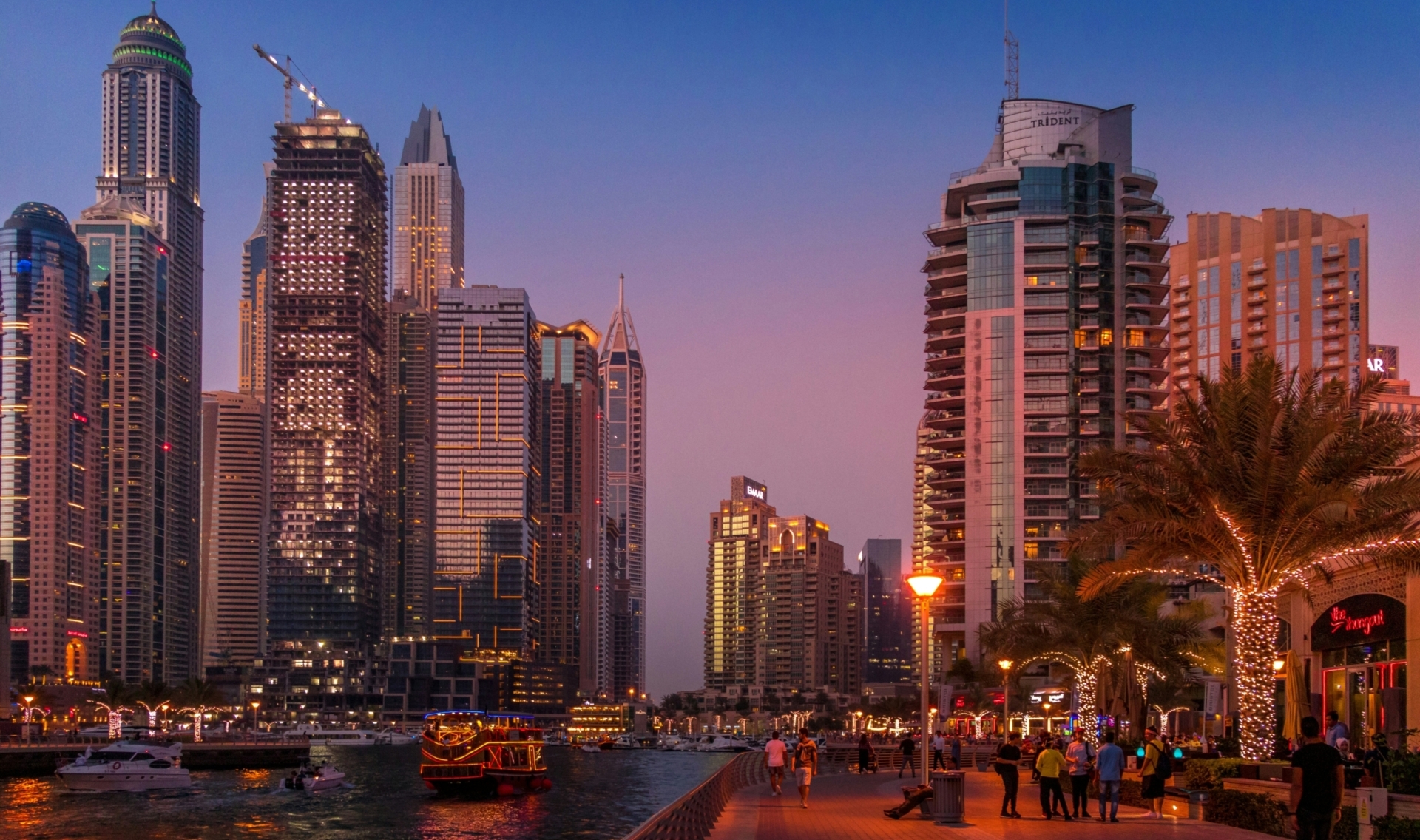
Buying property in Dubai as a foreigner is most active in these established freehold communities:
- Dubai Marina – Waterfront living, strong rental demand, established community infrastructure.
- Downtown Dubai – Home to the Burj Khalifa. High-end apartments with strong capital appreciation and low vacancy.
- Palm Jumeirah – Dubai’s most iconic address. Premium pricing with strong international buyer demand.
- Jumeirah Village Circle (JVC) – Most accessible price points in the freehold market. Strong rental yield performance.
- Dubai Hills Estate – Family-focused community. Fast-growing with strong secondary market activity.
- Business Bay – Central location with strong short-term and long-term rental demand.
Purchase Costs – What Buying Property in Dubai as a Foreigner Actually Costs
Buying property in Dubai as a foreigner involves one of the most transparent cost structures in any international market — but buyers consistently underestimate the total.
Dubai Land Department (DLD) transfer fee: 4% of the purchase price. This is the largest single closing cost. On a AED 2,000,000 property (approximately USD 545,000), the DLD fee alone is AED 80,000.
Additional closing costs:
- DLD registration fee: AED 2,000-4,000 depending on property type
- Trustee office fee: AED 4,200
- Real estate agent commission: 2% (paid by buyer in most cases)
- Mortgage registration fee: 0.25% of loan value (if financing)
Total closing costs: budget 7-9% above the purchase price. This is the number most buyers do not model accurately when they begin their search.
Service Charges – The Cost Most Buyers Miss
There is no annual property tax in Dubai. But every property in a managed development pays annual service charges covering maintenance, amenities, security, and community management.
Service charges in Dubai range from AED 10-35 per square foot per year depending on the development. On a 1,000 square foot apartment, this means AED 10,000-35,000 annually (USD 2,700-9,500).
This is the most consistently undermodelled cost in Dubai investment planning. Before purchasing for rental yield, always calculate your net yield after service charges, management fees, and realistic vacancy periods. The gross yield headline number often quoted at 6-10% by agents and the actual net income can differ by 2-4 percentage points.
Rental Yields When Buying Property in Dubai as a Foreigner
Rental yields in Dubai average 6-8% for well-positioned properties in established freehold zones. The Dubai market has been characterised by sustained demand growth driven by business migration, the Golden Visa program, and Dubai’s position as a regional hub for international wealth management and entrepreneurial activity.
The Golden Visa – Residency Through Buying Property in Dubai as a Foreigner
Buying property in Dubai as a foreigner can qualify you for UAE residency under the Golden Visa program:
AED 750,000 (approximately USD 204,000) – Renewable 2-year property investor visa.
AED 2,000,000 (approximately USD 545,000) – Renewable 10-year Golden Visa. The property must be fully paid not mortgaged below this equity level. A mortgaged property where the paid equity reaches AED 2M may qualify confirm with a UAE immigration specialist at time of purchase.
The Golden Visa provides full UAE residency rights including Emirates ID, the ability to sponsor family members, and long-term residency status. It does not confer citizenship.
Off-Plan Purchases – Escrow Protection
Dubai’s off-plan market is large and active. Developer payment plans – often 10% down with payments spread over 3-5 years including post-handover – have made off-plan accessible to a wide range of buyers.
Under UAE Law No. 8 of 2007, all payments for off-plan properties must be held in RERA-regulated escrow accounts. Developers can only access funds as construction milestones are verified and approved by RERA. This protects buyers if a developer fails to deliver.
Always verify the developer is RERA-registered before committing any funds. Any agent facilitating a transaction in Dubai must also hold a RERA licence. Engaging an unlicensed agent offers no legal protection in a dispute
Inheritance Planning – Register a DIFC Will
Without a registered will, Dubai property passes under Sharia law by default for non-Muslim foreigners. The DIFC Wills Service Centre allows non-Muslim expatriates and foreigners to register wills under common law principles, ensuring property passes to chosen beneficiaries according to your instructions.
Any foreign buyer owning property in Dubai should register a DIFC Will. This is a practical estate planning step that takes one appointment and protects your assets permanently.
The Buying Process Step by Step
- Identify property and verify it sits in a designated freehold zone (Dubai REST app or DLD)
- Verify developer is RERA-registered (off-plan) or seller holds a legitimate DLD title deed
- Sign the Memorandum of Understanding (MOU) and pay 10% deposit
- Agent obtains No Objection Certificate (NOC) from the developer
- Parties complete at the DLD – pay transfer fees, sign transfer documents
- Title deed issued in buyer’s name
For a ready property, the process from MOU to title deed typically takes 2–6 weeks.
Independent Guidance
Soulberg Estates works with personally vetted Dubai contacts – agents and professionals who are transparent on fees, service charges, and the full ownership picture before you commit.
Download the Soulberg Dubai Buyer’s Guide or begin your enquiry to speak directly before anything moves forward.
Buyer Questions
Buying Property in Dubai as a Foreigner
Yes. Dubai allows foreign nationals to purchase freehold property in designated freehold zones including Downtown Dubai, Dubai Marina, Palm Jumeirah, Business Bay, and Jumeirah Village Circle. Outside these zones, foreigners can purchase leasehold interests for up to 99 years. There are no restrictions based on nationality and no requirement to be a UAE resident.
Yes. A property purchase of AED 2 million (approximately $545,000 USD) or more qualifies for a 10-year UAE Golden Visa. The property must be completed and fully paid. The visa covers the buyer and immediate family members and grants the right to live, work, and study in the UAE. It is renewable indefinitely as long as the property is held.
Total acquisition costs typically run 6–8% above purchase price. Main costs: Dubai Land Department (DLD) transfer fee of 4%, real estate agent commission of 2% paid by buyer, mortgage registration fee of 0.25% if financing, and property registration trustee fees of approximately AED 4,000. There is no annual property tax in Dubai, though service charges apply for maintained communities.
Dubai has seen consistent price growth since 2021, driven by Golden Visa demand, population growth, and limited freehold supply in prime zones. Gross rental yields in areas like Dubai Marina and Business Bay average 6–8%. Off-plan properties from RERA-regulated developers offer payment plans and can deliver capital appreciation before completion. Location selection and developer track record are critical.
A Dubai purchase typically completes in 30 days. Steps: (1) Agree price and sign a Memorandum of Understanding (MOU/Form F) with 10% deposit; (2) Apply for No Objection Certificate (NOC) from developer; (3) Pay remaining balance and DLD fees; (4) Transfer at the Dubai Land Department. No notary required — the DLD handles the transfer directly.
There is no annual property tax, no capital gains tax, and no inheritance tax on property in Dubai. The only transaction cost is the 4% DLD transfer fee paid at purchase. Rental income is also tax-free in the UAE. This makes Dubai one of the most tax-efficient property markets in the world for international buyers.