
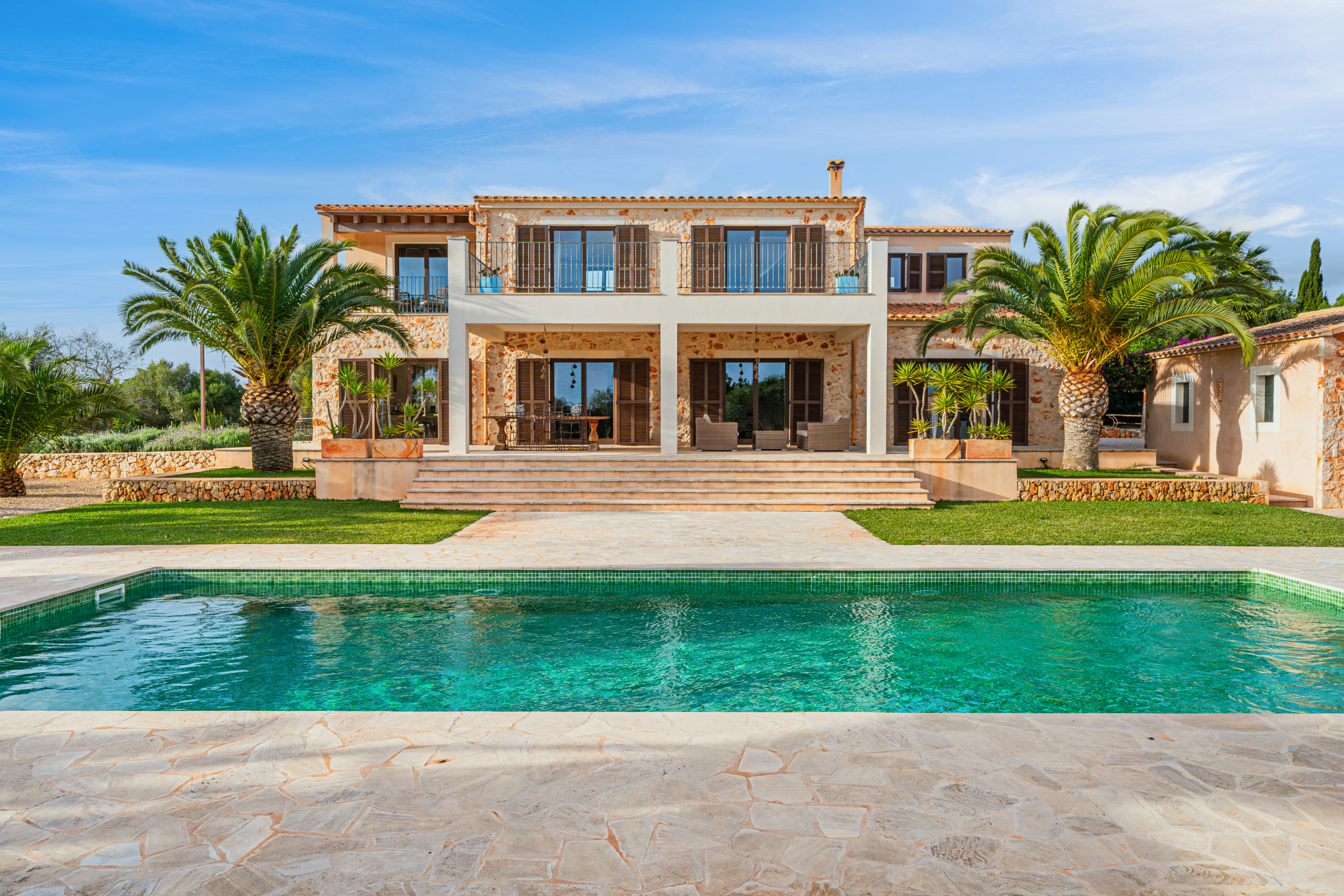
Buying property in Spain as a foreigner is one of the most accessible property purchases in Europe – open to all nationalities with no minimum investment and no residency requirement.
Spain is not one property market – it is seventeen autonomous communities, each with its own tax rates, rental regulations, and legal requirements. This guide focuses specifically on two of the most in-demand markets for international buyers: the Costa del Sol in Andalusia, and Mallorca in the Balearic Islands. Rules, costs, and restrictions differ significantly between them and are covered separately throughout.
Buying Property in Spain as a Foreigner – No Restrictions Apply
Buying property in Spain as a foreigner requires no government approval, no minimum purchase price, no nationality qualification, and no residency status. Any person from any country can buy freely.
The Spanish property market recorded 145,370 sales to foreign buyers in 2025 – a record high, 4.2% above 2024, with foreign buyers representing 19.8% of the entire Spanish market (Spanish Notaries Council 2025). Demand from international buyers is at its highest point in the history of the Spanish market.
Two Outstanding Markets: Costa del Sol and Mallorca
Costa del Sol
Buying property in Spain as a foreigner is most active along the Costa del Sol. Towns including Marbella, Estepona, and Benahavís attract buyers from the UK, Scandinavia, Northern Europe, the US, and the Middle East. The combination of climate, infrastructure, international schools, and long-term capital resilience makes this one of the most stable luxury markets in Europe.
The average price paid by foreign buyers across Spain in 2025 reached approximately €2,895 per square metre, a record high (Spanish Notaries data). In premium Costa del Sol areas, prices run significantly above this average.
Mallorca
Average apartment prices in Mallorca reached €5,069 per square metre by July 2025 up 19% year-on-year (BHHS Spain). Premium areas including Andratx, Bendinat, and Son Vida exceed €7,000 per square metre. Prices across the Balearic Islands have risen 45-50% per square metre over the past five years. Short-term rental rules in Mallorca tightened significantly as of July 2025: new licences in multi-unit buildings now require 60% neighbour consent. Properties without existing licences cannot assume approval. Fines for operating without a licence reach €40,000-60,000.
Your First Requirement When Buying Property in Spain as a Foreigner: The NIE Number
Before any property purchase in Spain, you must obtain a Número de Identidad de Extranjero (NIE) – a Spanish tax identification number for foreigners. Without this, no purchase can proceed.
The NIE is obtained at a Spanish consulate in your home country, or at a police station in Spain. In high-demand areas like the Costa del Sol and Mallorca, appointment times can stretch to several weeks. Start this process early before you are ready to make an offer so it does not slow a transaction. A Spanish lawyer can obtain the NIE on your behalf using a power of attorney.
Purchase Taxes – What You Will Pay
The tax you pay depends entirely on whether the property is a resale or a new build.
Resale property: Property Transfer Tax (ITP) applies. In Andalusia (Costa del Sol): 7%. In the Balearic Islands (Mallorca): 8–13% depending on value bracket.
New build: VAT (IVA) at 10% applies, plus Stamp Duty (AJD) at 1.2–2% depending on the region.
Budget 10-13% above the purchase price for all taxes and fees combined – ITP or IVA, notary fees, land registry fees, legal fees, and administrative costs. This applies to every purchase regardless of nationality.
Non-residents buying from a non-resident seller must withhold 3% of the purchase price at completion and pay it directly to the Spanish Tax Agency. This is a withholding on the seller’s potential capital gains not an additional buyer’s tax but it affects the mechanics of closing and must be planned for in advance.
Ongoing Tax Obligations as a Non-Resident Owner
Buying property in Spain as a foreigner creates annual tax obligations that many buyers discover only after purchase.
IBI (Impuesto sobre Bienes Inmuebles): Annual municipal property tax calculated on the cadastral value. Paid to the local council every year.
IRNR (Non-Resident Income Tax): Non-resident owners must file an annual declaration even if the property generates no income. The calculation is based on 1.1–2% of the cadastral value, taxed at 19% for EU/EEA residents and 24% for non-EU residents. This obligation exists every year you own the property whether you use it or not.
Rental income: Taxable in Spain regardless of where rent is paid or where you live. EU/EEA residents can deduct allowable expenses before tax is calculated. Non-EU residents cannot.
The Spain Golden Visa – Permanently Closed
Buying property in Spain as a foreigner no longer qualifies you for residency through investment. Spain’s Golden Visa real estate route was permanently closed on April 3, 2025 under Organic Law 1/2025. No new applications are accepted. This is not a temporary pause the program is ended.
For buyers wanting to live in Spain, residency options in 2026 include the Non-Lucrative Visa (for those with sufficient passive income), the Digital Nomad Visa (for remote workers), and standard EU residency processes for EU nationals. Confirm the right route for your situation with a Spanish immigration lawyer before purchasing.
Legal Due Diligence in Spain
In Spain, the legal burden of verifying a property falls entirely on the buyer. The seller has no obligation to disclose hidden debts, unresolved planning issues, or outstanding community fees.
Outstanding IBI tax and community fees attach to the property in Spain not to the previous owner. You can legally inherit another person’s debts without knowing they exist. Your Spanish lawyer must check the Nota Simple (Land Registry extract), outstanding fee history, rental licence status, building permits, and planning compliance before you sign anything.
Legal fees typically run 1% of the purchase price. This is the protection that determines whether your purchase is secure.
Mortgage Access for Non-Residents
Spanish banks lend to foreign buyers. Non-residents typically access 60-70% Loan-to-Value, compared to 80% for residents. You need at least 30-40% of the total purchase cost in cash covering deposit, taxes, and fees. EURIBOR dropped to approximately 2.08% in August 2025 (ECB data), offering the first meaningful relief on variable mortgage costs since 2023.
The Buying Process Step by Step
- Obtain your NIE number
- Open a Spanish bank account
- Engage an independent Spanish lawyer
- Agree price and sign a reservation contract with deposit (typically €3,000-10,000)
- Lawyer conducts full due diligence on Nota Simple and property history
- Sign the Contrato de Arras (private purchase contract) and pay 10% deposit
- Complete at the Notary – sign the Escritura Pública, pay taxes, receive keys
- Register ownership at the Land Registry
From offer to completion: typically 6–12 weeks.
Buyer Questions
Buying Property in Mallorca & Costa del Sol
Yes. Spain imposes no nationality restrictions on property ownership. Non-EU buyers can purchase freely anywhere in Spain — including Mallorca and the Costa del Sol. The process requires a Spanish tax identification number (NIE), a Spanish bank account, and a qualified notary to complete the deed. Non-EU nationals from outside the Schengen Area are limited to 90 days per 180 days of stay unless they hold a qualifying visa.
Both are part of Spain and follow the same legal and tax framework — but they attract different buyer profiles. Mallorca draws Northern European buyers seeking island lifestyle, privacy, and premium coastal or rural fincas, with strong demand in the southwest (Port Andratx, Santa Ponsa, Camp de Mar). Costa del Sol — particularly Marbella and Estepona — offers year-round mild climate, a larger international community, better mainland connectivity, and a more active luxury new-build market. Entry prices are broadly comparable; Marbella’s Golden Mile rivals Mallorca’s southwest coast on price per square metre.
Budget 10–14% above the purchase price regardless of which Spanish region you buy in. For resale properties: Transfer Tax (ITP) of 8–11% depending on price bracket. For new builds: VAT (IVA) of 10% plus Stamp Duty (AJD) of 1.5%. Additional costs include notary fees (0.1–0.3%), land registry fees, and independent legal fees (1–2%). Agent commissions are typically 5–6% paid by the seller. Annual property tax (IBI) runs approximately 0.4–1.1% of the cadastral value.
Southwest Mallorca — Port Andratx, Santa Ponsa, Camp de Mar, and Palmanova — remains the most liquid luxury segment with properties from €1.5m to €10m+. The northeast (Pollença, Alcúdia, Artà) suits buyers seeking rural fincas and quieter character villages. Palma city centre offers strong rental yields for apartment buyers. Properties with sea views and good road access command a significant premium over similar inland properties regardless of area.
Marbella — particularly the Golden Mile and Nueva Andalucía — is the prestige benchmark with the deepest pool of luxury resale stock. Estepona has seen consistent appreciation and attracts buyers priced out of Marbella. Benahavís offers seclusion with close access to both Marbella and the coast. La Zagaleta remains the benchmark for ultra-private gated estate living in southern Europe. Emerging areas further west (Casares, Manilva) offer lower entry prices for buyers willing to be slightly further from Marbella’s infrastructure.
The Spanish buying process typically takes 6–12 weeks. Steps: (1) Agree price and sign a Reservation Agreement with a holding deposit of €6,000–€20,000; (2) Due diligence — your independent lawyer verifies title, debts, planning permissions, and community charges; (3) Private Purchase Contract (Contrato de Arras) with a 10% deposit; (4) Final Deed of Sale (Escritura de Compraventa) signed before a Spanish notary; (5) Land Registry registration. Always instruct your own independent Spanish lawyer — never use the seller’s or agent’s recommended lawyer.
Yes. Rural land in Mallorca is subject to strict planning regulations. Many fincas contain structures built before modern planning law that cannot be extended or rebuilt without specific permits. Some rural properties sit on protected land (rústico protegido) where new construction is prohibited entirely. Confirming the exact urbanistic classification and the legal status of all existing buildings is essential before any purchase — this is where buyers without proper legal due diligence make costly and irreversible mistakes.